 Fly Brain Hub
Hemibrain
HHMI Janelia Research Campus (FlyEM Project Team)
Dense synaptic-level reconstruction of a large part of the central fly brain, including the mushroom body and central complex, produced by Janelia's FlyEM team. It contains roughly 25,000 neurons sorted into thousands of cell types, with v1.0 released in January 2020 and v1.2 in December 2020. The overview paper was published in eLife and the data is served through neuPrint.
Sources checked
Every fact above was read from these pages on the date the entry was added.
- janelia.org https://www.janelia.org/project-team/flyem/hemibrain
Used by: 23 projects
NAVis
navis-org (Fly Connectomics group, Cambridge)
A general-purpose Python library for handling neuron skeletons, meshes, dotprops and image volumes, with 2D/3D plotting, morphometrics, NBLAST similarity and template-brain transforms built in. Developed in the Cambridge fly connectomics community as the Python counterpart of the R natverse, it plugs into neuPrint and, through the fafbseg extension, FlyWire/FAFB. Performance-critical pieces have been moved to Rust via navis-fastcore.
fly-protein
Srikar Jy (@srikarjy)
Asks whether a mushroom-body sparse code, built on real projection-neuron to Kenyon-cell edges from the hemibrain, can find high-fitness protein variants on a small measurement budget, and answers no. Across 10 ProteinGym assays and 20 seeds at matched budgets, the fly learner reaches the top 1 percent in 30.5 percent of runs at 50 measurements against 54.5 for an evolutionary search and 40.0 for plain random search. An ablation finds real hemibrain wiring slightly worse than random wiring.
flyconn
@moiz-lakkadkutta
A Python toolkit that puts MaleCNS v1.0, FlyWire v630 and v783, hemibrain, MANC and BANC behind one offline, checksummed data layer, then builds signed sparse graphs on top of it. It propagates uncertainty (path stability across weight thresholds), runs a cross-platform LIF simulator validated against published results, and drives experiments from YAML specs that emit reports with provenance and dataset citations. Controls run by default. The README calls the project pre-alpha and is explicit that neurotransmitter identities are predicted and every simulation output is a model prediction.
Fly Connectome Research (hemibrain lesion study)
@alok-108
A lesion study rather than a demo. A 1,000-neuron subnetwork of the Janelia hemibrain, picked by highest total degree (113,089 directed edges), is run as a point LIF network, and then neurons are deleted to see what the dynamics need. Removing 10% of the hubs cuts recruited unstimulated neurons from 653 to 92, while deleting twice as many at random leaves 299 on average. A sweep of 157 runs varies drive fraction, coupling and timestep. The limitations section is blunt: every synapse is modelled as excitatory, so high coupling runs away, and the hub-enriched sample must not be generalised.
Insectome (Bug Connectome Project)
theworker02
A local studio over several insect connectome packs — neuPrint hemibrain, MANC and optic lobe, plus Insect Brain Database projectomes — browsed by silhouette and cell class rather than by lists of IDs. It reuses published level-0 and level-1 graphs instead of re-segmenting electron microscopy, keeps raw EM remote, and holds the local cache to a 10 GB ceiling; the shareable Pages build ships about 23 MB of catalogs against a 1.7 GB local pack footprint. Its stated rules include never merging the packs into an invented single insectome and never claiming synaptic connectivity without evidence.
FlyBrain Alphabet Trainings
AscendedStarr
A 512-neuron spiking mushroom body with 13,824 trainable Kenyon-cell to MBON synapses, taught 27 hand-drawn glyphs by a three-factor dopamine rule in under two minutes on one CPU thread, then read 168,985 letters out of a book without an error. The model has no digit output cell, so its 0 of 300 on digits is a structural guarantee rather than a modest score. Version 0.2.0 swaps the invented wiring for the measured hemibrain connectome and reports the uncomfortable result: the real wiring and a degree-matched shuffle of it both score 243 of 243 across three seeds, a paired difference of zero.
SIFa Connectome Analysis
szac74
Reproducibility code for the connectome analyses behind a SIFamide study. The original work was done interactively in neuPrint and no single script was archived, so this repository consolidates the query logic, neuron identifiers, filtering rules and site metadata into scripts that rerun the published numbers on hemibrain v1.2.1 and male-cns v1.0. A validation script checks configured totals; the authors report all key totals reproduced exactly. The README states plainly that mesh distances were screening metrics only and are not by themselves evidence of synaptic connectivity.
flydoom (mikeluvnugs)
mikeluvnugs (@mikeluvnugs-gif)
A leaky integrate-and-fire model over measured fly wiring plays a ViZDoom scenario, and the finding is that it plays badly. Over 20 seeds the full FlyWire brain scores 1.25 kills per episode and the hemibrain version 1.15, against 1.45 for random actions and 0.00 for doing nothing; neither beats random and the two connectomes are not distinguishable. The README lists what is not biology, including receptive fields assigned by array index and constants never retuned for the larger graph, and keeps earlier negative results such as a five-seed configuration that regressed on twenty.
HouseFly
Vortitron
A fly that lives in a Home Assistant dashboard, running a rate model of 4,724 identified neurons wired by 126,108 measured synaptic connections, with household sensors delivered to the neurons that carry that kind of information in the fly. About 450 KB of connectome and a few milliseconds of numpy per tick. Its one rule: every behaviour either comes out of the measured wiring or is labelled a controller, and the failures are checks: the compass does not integrate a sustained turn, the escape pathway had no real threshold, and a directed escape is impossible from half a brain.
FruitFlyBrain (datasets and projects)
ROHITCRAFTSYT
A workspace of eight runnable projects over two connectomes that need no login: hemibrain v1.2 at 21,739 neurons, 3.55M connections and 14.3M synapses, and FlyWire FAFB annotations covering 139,248 neurons and 8,840 cell types. The projects run graph analysis, a neurotransmitter and cell-type census, shortest-path circuit tracing, a connectome-wired simulation, NAVis 3D rendering, a cell-type classifier, neuron embeddings and synapse link prediction, each writing its own figures and tables. Several carry a sanity check against known fly neuroscience.
fly(コネクトームを触る環境)
seeton
A Japanese workbench for handling three connectomes side by side, with a table comparing what each one covers: the male central nervous system with brain, optic lobes and nerve cord together, the lighter central female brain used for practice because every tool supports it, and the whole female brain kept as the comparison for sex differences. The environment comes pre-wired with the standard morphology, query and template libraries plus a physics body and a local web app, and a fetch script that pulls 78 MB by default or the full 7.7 GB on request.
cocoa
flyconnectome
A Python library for comparing and jointly clustering neurons across connectomes, including FlyWire, hemibrain, MANC and MaleCNS. It helps investigate cell-type correspondence across different reconstructions. The documented FANC and BANC integrations remain TODO items and are not counted as implemented support here.
Vaxenfly
vaxenfly
A fixed reward-punishment readout for AI agents, built from the mushroom body of the male CNS: 4,064 Kenyon cells, 97 output neurons and 340 dopaminergic neurons, and 61,210 KC-to-MBON edges. Each compartment's sign comes from the ratio of PAM to PPL1 presynapses in the connectome, 8 appetitive, 7 aversive and one unsigned, and nothing is trained. The real KC-to-MBON weights give a 12.8 percent median d-prime gain over degree-preserving shuffles. Rebuilt on hemibrain, one of its own bounds fails, which the README reads as thresholds not transferring between datasets.
重みは学習するのか、測るのか。ハエの脳が問い直す AI のつくり方
村本 (@1amageek)
A Japanese technical essay whose point is provenance, not scale: in a connectome model the roughly 15 million weights are counted off electron micrographs rather than fitted, with one hand-chosen constant of 0.275 mV. The often-quoted 91 percent is accuracy at predicting circuit responses, not at reproducing behaviour, and it cites Lappalainen et al. and Beiran and Litwin-Kumar to argue that wiring constrains a mechanism without determining it, since gap junctions, neuromodulation and plasticity rules are absent. It reads DOOMFLY and Fly64 as designed input-output mappings.
connectome_interpreter
Yijie Yin, University of Cambridge
A Python library that turns a wiring diagram into testable hypotheses about circuit function, and it runs on a laptop or in Colab even for whole-brain analyses of around 140,000 neurons. It computes polysynaptic effective connectivity between groups of neurons with or without signs, retrieves and plots the actual subcircuit between sources and targets, and exposes a differentiable connectome model. Installable from PyPI, with an accompanying preprint and Colab notebook.
coconatfly
Gregory Jefferis (natverse)
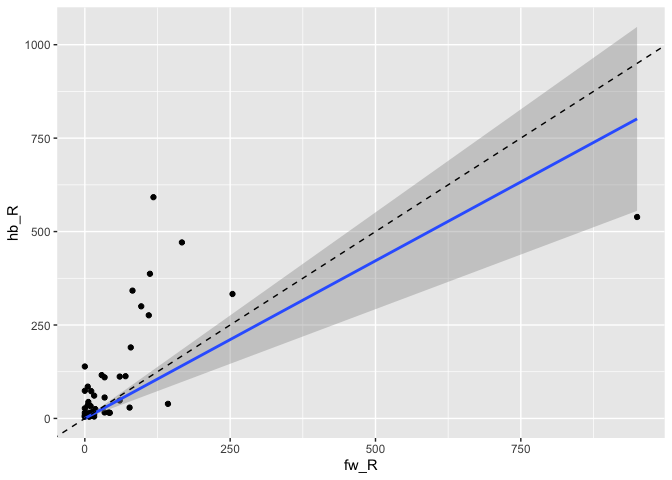
An R package from Greg Jefferis that puts one uniform interface over the major fly connectomes so the same partner-query or cell-type comparison can be run across hemibrain, FlyWire, MANC, FANC, BANC, the male CNS and the male optic lobe. It is flagged as experimental and its API may still change, but it is already the workhorse for hemibrain-versus-FlyWire comparisons in the natverse community.
connectome_data_prep
Yijie Yin, University of Cambridge
Yijie Yin's (Cambridge) notebooks and scripts for turning raw connectome releases into analysis-ready sparse connectivity matrices and metadata tables, with axon/dendrite splitting via flow centrality. It covers the adult male CNS, BANC, FlyWire/FAFB, hemibrain and MANC as well as the larval connectome, and includes benchmarking code for the pathfinding and effective-connectivity analyses used in the Connectome Interpreter framework. No license file is present.

Fly Connectome Data Tutorial (SJCABS)
SJCABS winter school (Sven Dorkenwald & Alexander Bates)
Course material from the San Juan Winter School on Connectomics and Brain Simulation, written by Sven Dorkenwald and Alexander Bates, that walks students from loading data to morphology, direct and indirect connectivity analysis in both Python and R. Its most useful feature is a harmonised metadata schema and a public cloud bucket covering BANC, FAFB, the male CNS, MANC and hemibrain, so the same notebooks run across all five datasets.
natverse / nat
Jefferis lab, MRC LMB
A tidyverse-style family of interoperable R packages for importing, visualising, analysing and exporting 3D neuroanatomy, built around the core nat (NeuroAnatomy Toolbox) package that Greg Jefferis's group has maintained on GitHub since 2014. Satellite packages such as neuprintr and fafbseg give R users access to hemibrain and FlyWire/FAFB data. The ecosystem was described by Bates, Jefferis and colleagues in eLife in 2020.
neuPrint
Janelia FlyEM (HHMI)
Janelia's connectome analysis ecosystem: a Neo4j-backed graph database plus the neuPrintExplorer web front end and an HTTP API for querying neurons and synaptic connectivity. It is the official home of the hemibrain, MANC and male CNS datasets from the FlyEM team, and the ecosystem was described in a 2022 Frontiers in Neuroinformatics paper by Plaza et al.
neuprint-python
Janelia FlyEM (HHMI)
The official Python client for the neuPrint service, letting you pull neuron metadata, connectivity tables and skeletons from Janelia's connectome databases into pandas without writing Cypher by hand. First published on PyPI in January 2020 and still actively released (0.6.3 in July 2026), it is installable via pip, conda or pixi.
Virtual Fly Brain
Virtual Fly Brain consortium (UK institutions incl. MRC HGU)
A long-running UK-funded web atlas that registers neuron images, gene-expression patterns and connectomics onto standard Drosophila brain templates and links them through an anatomy ontology, so anatomy, expression and connectivity can be cross-searched in one place. Supported since 2009, it now indexes over 600,000 3D images and roughly 490,000 neurons with connectivity, spanning hemibrain, FlyWire, FANC and the larval L1EM data. The v2 front end (geppetto-vfb) is an MIT-licensed customisation of the Geppetto platform.
Wikipedia: Drosophila connectome
Wikipedia (Wikimedia Foundation)
Community-written encyclopedia article that serves as a one-stop overview of fruit fly connectomics, explaining why Drosophila is used as a model and walking through the major datasets from the 3,016-neuron larval brain to the adult hemibrain, FlyWire, the FANC and MANC nerve cords, and the 2025 whole-CNS BANC and male CNS reconstructions. It also touches on how wiring structure relates to behavior. Text is under CC BY-SA 4.0; last edited August 11, 2026.